Every sample. Every event. Every result. Connected.
The semantic data engine that weaves complex, multi-department R&D into ML-ready knowledge. Built for the scientists of today, and the self-driving labs of tomorrow.
R&D has evolved. Traditional data management hasn't.
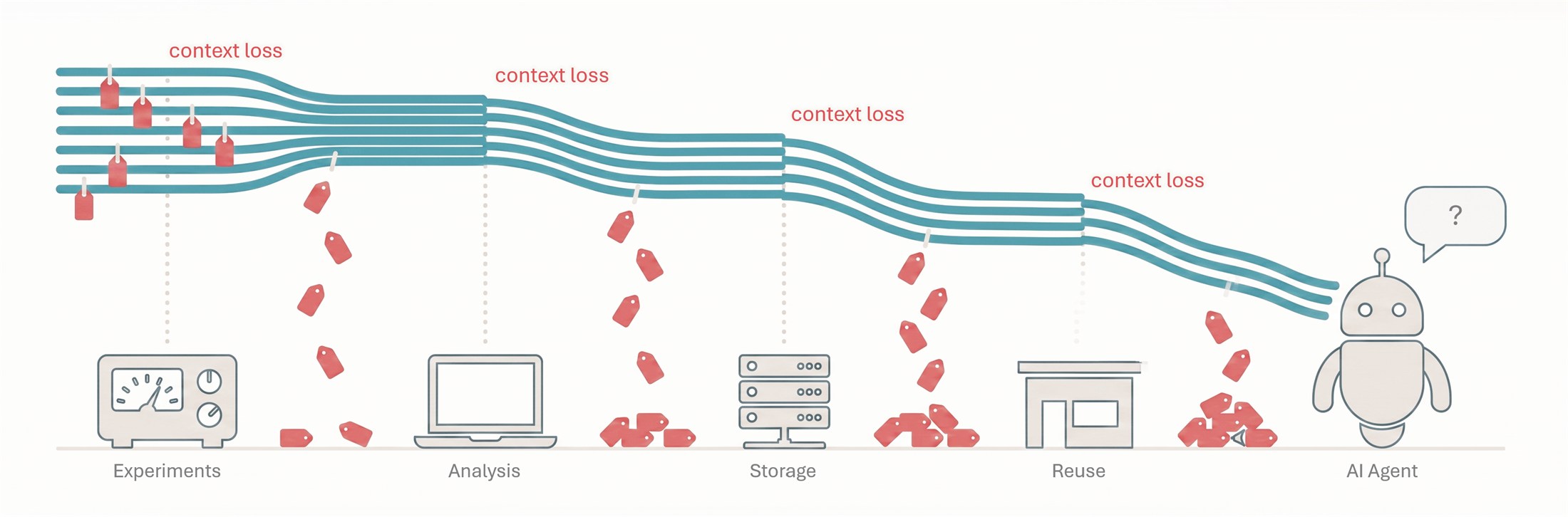
Whether you are coordinating three isolated departments or orchestrating a fully autonomous lab, ELNs and LIMS fail for the exact same reason: they force dynamic physical science into rigid digital spreadsheets.
The Human Bottleneck
Chemistry lives in one system. Mechanical testing in another. Your data scientists spend 80% of their time writing Python scripts to VLOOKUP and merge data just to figure out what happened.
The Autonomy Bottleneck
Robots produce unpredicted states and massive volumes. If your database requires a software vendor to reconfigure a schema for every new robotic workflow, your automation is paralyzed.
What is datin?
A software platform, not an endless consulting project.
A Live Knowledge Graph
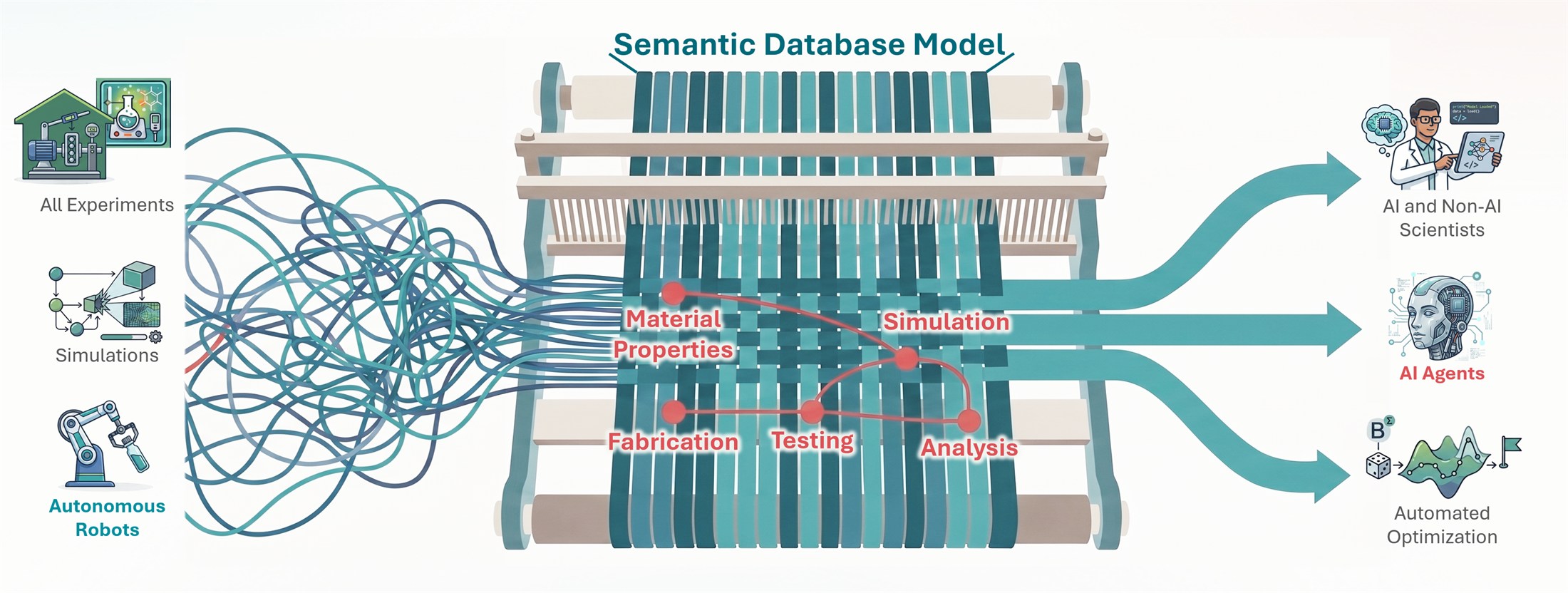
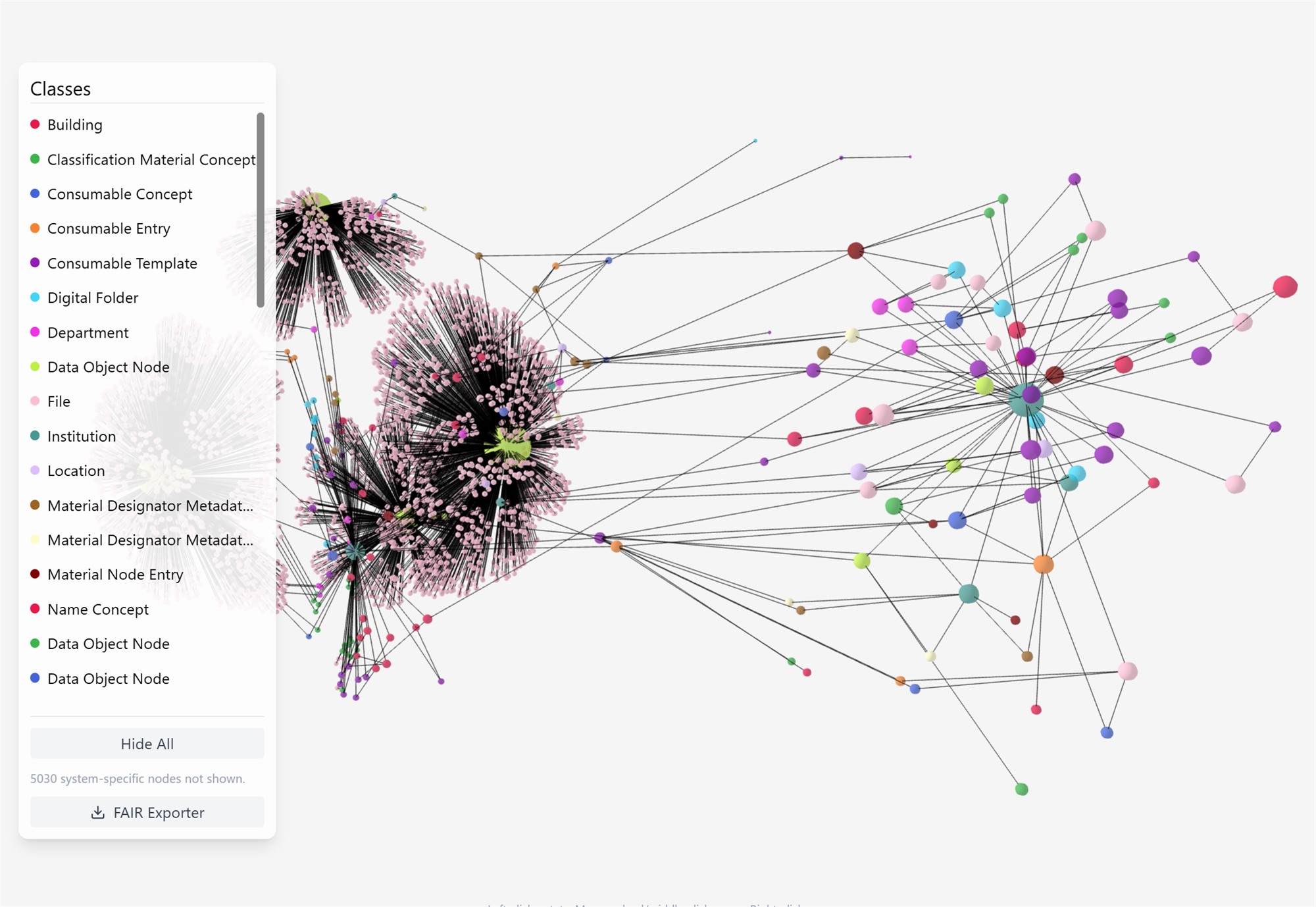
datin isn't a passive spectator. It's an active, semantic knowledge graph that your scientists, software, and lab robots can write to and read from.
Semantic Data Stitching
Forget manual data wrangling. Because every record is captured with its semantics, disparate information is already connected when you query it, giving you immediate, trustworthy context.
A Living Schema for Physical AI
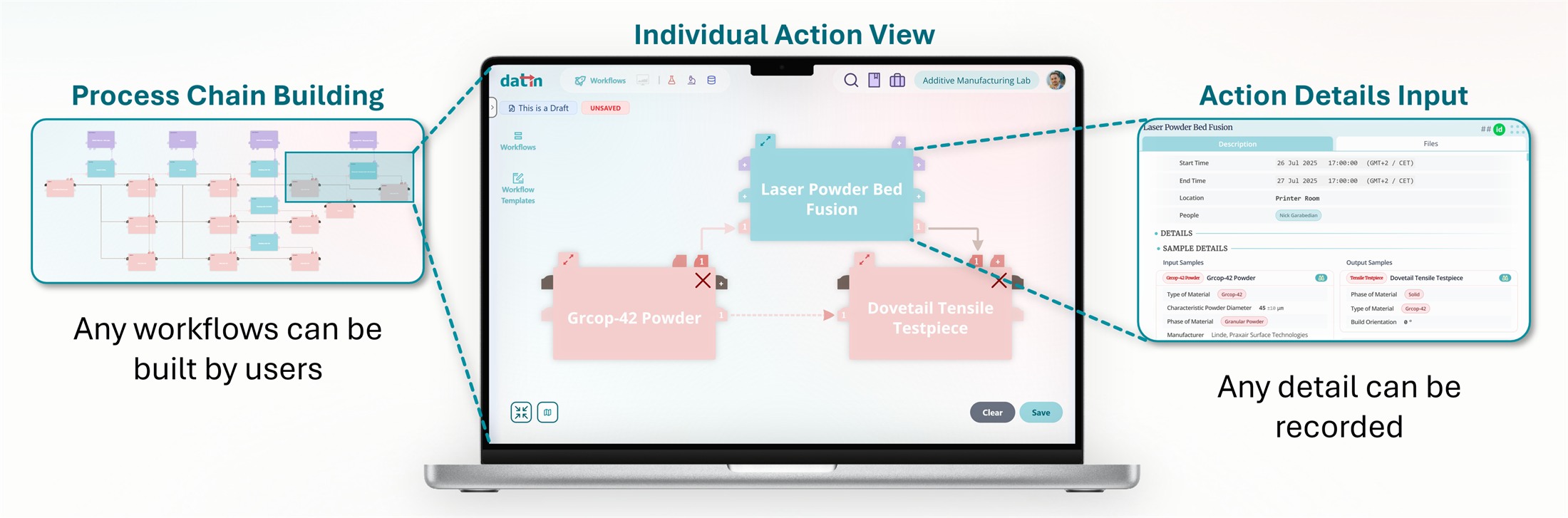
We don't force you to build multi-year ontologies or rigidly pre-define your templates. datin exposes the ability to change the schema on the go. As your experiments change, whether driven by human intuition or an AI agent controlling a robot, the knowledge graph adapts.
One connected record.
Three superpowers.
Every feature solves the human problem and the robotic problem at once, because they were always the same problem.
Deterministic Cross-Silo Merging
Stop manually merging spreadsheets. datin natively understands that an additive formulation (Chemistry) and a friction test (Mechanical) belong to the same physical object. It normalizes units and aligns results, regardless of which department or robot generated it.
“Show me the mechanical wear-test results of all samples containing >5% Additive X.”
Git-like Lineage & "Time-Travel" Provenance
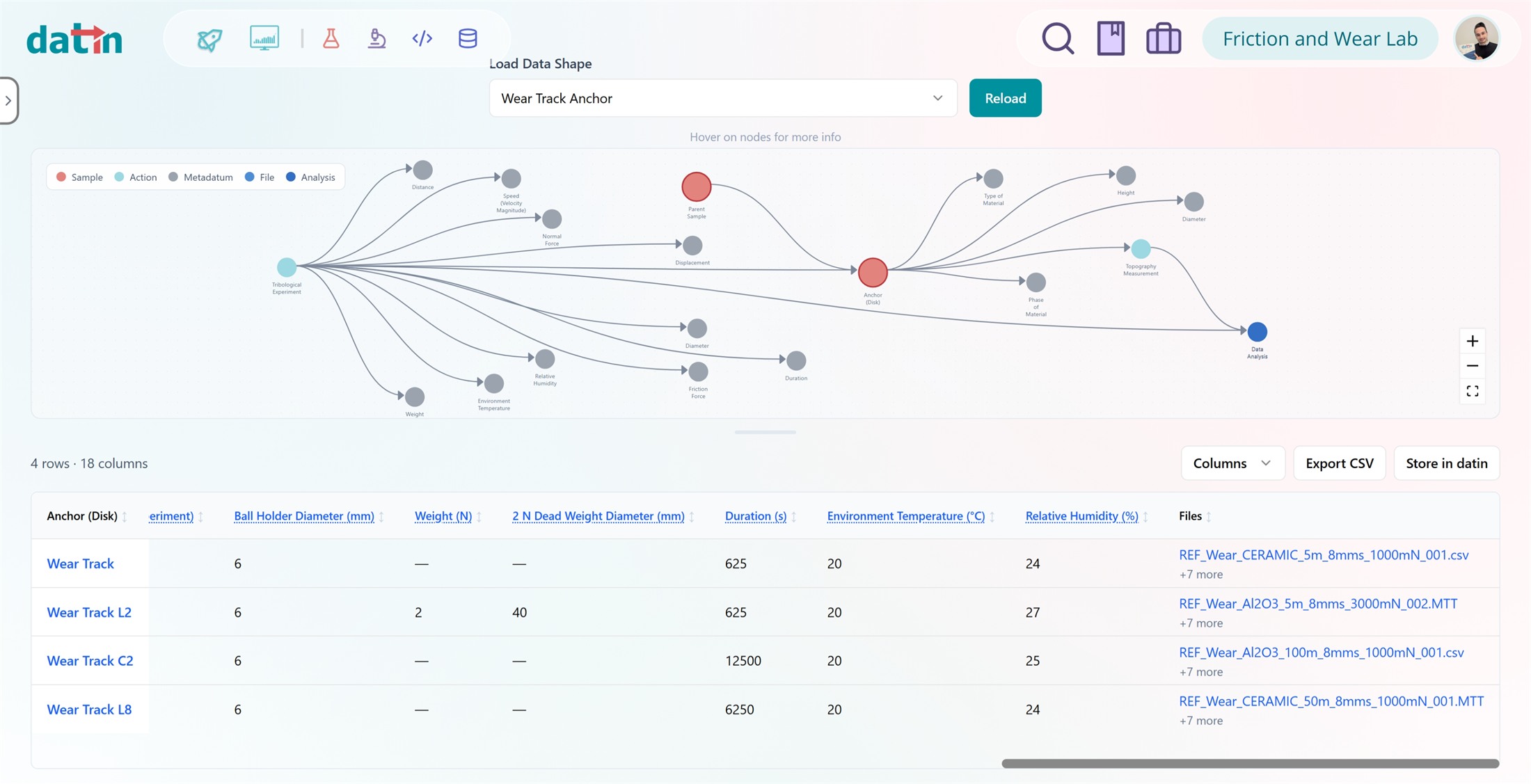
Legacy systems overwrite data. datin operates with a capture-time semantic record. Trace the exact physical and digital provenance of any sample back to its inception. If a machine calibration error is discovered months later, branch the data, and downstream tables can follow.
“This batch failed. Trace its exact history from mixture to Machine B.”
Flexible Data Input and Programmatic Analysis
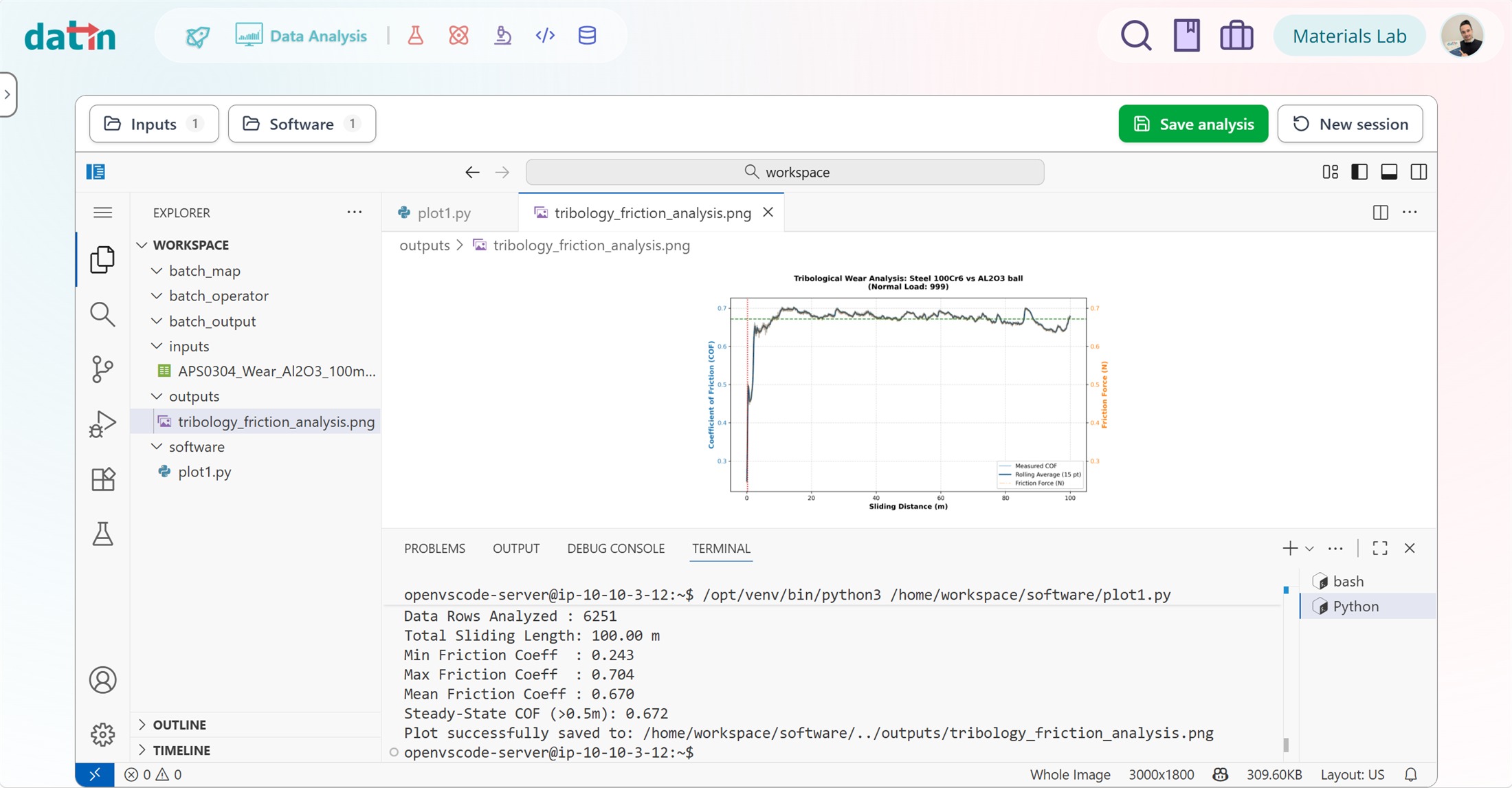
With the integrated coding environment and our SDK, imports and analyses can be done programmatically and accounted for as events, just like physical experiments. datin benefits from the systems you already run: your ELN and LIMS feed it rather than compete with it.
“Analyze this data with the script developed by Rudy in 2018.”
True FAIR data export: RDF in one click. Every record is mapped to open standards, so your knowledge graph leaves datin as portable, machine-readable RDF whenever you need it. No data lock-in, no export project.
Don't have a Self-Driving Lab yet? That's exactly why you start here.
Autonomy is impossible without unified, machine-readable data. While you build out your robotic capacity, datin acts as the connective tissue for your human scientists today. By unifying your departments now, you are building the exact data foundation required for the AI agents of tomorrow. datin is built to be their memory layer.
Autonomy is woven, not installed.
Five stages, each woven onto the layer beneath it, from your lab's foundation to a self-driving lab. You can't weave without a warp.
Warp
Your lab's context, set up first
- Terminologies
- Lab Locations
- Projects
- Equipment
- Samples & Materials
- Files
LiveEmbody
Experiments and analyses, as digital twins
- Workflow Digital Twins
- Data Analysis Integration
LiveAutomate
Trigger intelligent events
- Automated Data Import
- Automated Sample & Equipment Recognition
- Simulations Integration
- Autonomous Events Creation
- Automated Data Analysis
Being builtVision
Deploy top-level intelligence
- AI Agents
- Robotic Labs
- Vision Intelligence
Being builtEvolve
Self-improving autonomy
- The learning loop
End game
Passport-ready data, structured at the point of origin
Europe's Digital Product Passport is arriving product group by product group, starting with batteries in 2027. Because datin structures substance, performance and lifecycle data at the point of origin in R&D, your passport data is already there when the rules reach your products. No retroactive audit.
Trusted by multi-department research institutions with robotic setups from Europe and the US.
Managing a live knowledge graph is incredibly hard. The technology behind datin took years to build, so it can serve as the memory layer for AI agents.
Is datin right for your lab?
The more complex the scenario, the higher datin's ROI is.
datin is for you if...
datin is NOT for you if...
- Processes
Good fit: Your workflow steps change frequently (added or removed monthly).
Not a fit: You have strict, unchanging standard operating procedures (SOPs).
- Materials
Good fit: You use variable, multi-method material testing.
Not a fit: Your materials are only tested in one standardized way.
- Equipment
Good fit: Your equipment requires regular calibration and sub-parts are changeable.
Not a fit: Your equipment is static with minimal setup changes.
- AI
Good fit: You view AI as a necessary catalyst for R&D.
Not a fit: You view AI as just a buzzword.
- Simulations
Good fit: You use digital simulations to guide physical experiment design.
Not a fit: Simulations aren't applicable to your work.
- Robotic Labs
Good fit: You want to scale and improve via lab automation.
Not a fit: You believe your processes cannot be automated.
Somewhere in between? That's exactly what a scoped pilot answers in a few weeks.
See it on your own data.
Give us your messiest, cross-department data or your most complex robotic output. We will run a scoped pilot using your samples, your instruments, and your vocabulary. Running in weeks, not quarters.
Deployed on-premises or in the cloud. Your data stays yours, and confidential.
Book a Technical Demo
Dr. Nick Garabedian
Managing Director & Chief Scientist, datin GmbH
Backed by